|
Briefing One
|
13°C · Light Drizzle
|
|
|
London · Wednesday, 6 May 2026
|
FTSE 100
10,764.69
-0.70% |
£/$
1.3314 |
Tube
2 alerts |
|
|
|
|
|
Good morning, London. The algorithm is taking the corner office, and the prime minister is auditing the art.
|
|
A £1bn hyperscale data centre arrives in Park Royal, while the high street loses a pizza empire. Elsewhere, the state weaponises its cultural subsidy, and the cost of capital resets to late-nineties levels.
|

The neighbourhood pizzeria pivots to data storage.
|
|
The algorithmic land grab
|
|
The artificial intelligence sector is aggressively consuming the capital's premium real estate. Microsoft has leased the entirety of Film House, an eight-storey Art Deco landmark in Soho, to serve as its new UK artificial intelligence hub. The tech giants are no longer hiding in suburban corporate parks. They are taking the most highly designed, culturally significant architecture in Zone 1.
|
|
The physical infrastructure required to power this is immense. In West London, the Old Oak and Park Royal Development Corporation has just approved a £1bn, 72MW hyperscale data centre. The three-storey, liquid-cooled facility will replace a redundant warehouse. Simultaneously, audio AI startup ElevenLabs has raised a massive Series D, hitting an $11bn valuation. London is rapidly re-engineering its entire physical geography to support the algorithmic boom.
|
|
|
|
The mid-market breaking point
|
|
The digital economy thrives. The physical high street is suffocating. Pizzeria chain Franco Manca is closing nine of its London locations and 16 nationwide as part of a company voluntary arrangement. The business cited high taxes and the total absence of business rates relief.
|
|
The closures include the brand's original site in Brixton — a sharp reminder that the affordable, mid-market neighbourhood restaurant model is structurally broken. This is a nationwide contraction playing out heavily in the capital. Over the last sixteen months, UK retail space has suffered a net loss of 1.5 million square feet. The property is shrinking because the margins required to operate it no longer exist.
|
|
Quick take
Should electric vehicles face a pay-per-mile tax?
Tap an option to vote
Vote to see yesterday's results →
|
|
|
The ideological audit
|
|
The government is reminding the cultural sector who holds the purse strings. Prime Minister Keir Starmer has directed Arts Council England to suspend and claw back funding from organisations that platform antisemitism.
|
|
The state has mandated an independent audit into the sector's handling of these allegations, making the intervention blunt. The government is directly linking state subsidy to ideological compliance, stripping away the traditional arm's-length independence of the Arts Council. The message to London's gallery and theatre directors is explicit: you can push the political boundary, but the state will no longer underwrite the legal risk.
|
|
The 1998 baseline
|
|
The cost of capital is resetting to late-nineties levels. The yield on 30-year UK government bonds hit 5.77% yesterday, the highest level since 1998. The surge is driven by Middle East volatility and anxiety over domestic political stability.
|
|
That macroeconomic pressure is immediately passing to the consumer. Mortgage affordability for UK homebuyers has plummeted to its lowest point since 2008, with initial repayments now absorbing 21.3% of gross income. The mid-tier lenders are buckling under the strain. Independent provider Blue Motor Finance is reportedly nearing administration, unable to absorb a potential £50m hit from the FCA's commission redress scheme.
|
|
Adam Byatt, Wandsworth
|
|
The chef behind the Michelin-starred Trinity is changing course. He is opening Rosina, a 50-cover Italian-inspired restaurant in Wandsworth this summer. Moving away from his signature French-influenced repertoire to serve pasta in South London is a smart, defensive move. Neighbourhood Italian dining offers better margins and fiercer local loyalty than formal gastronomy.
|
|
|
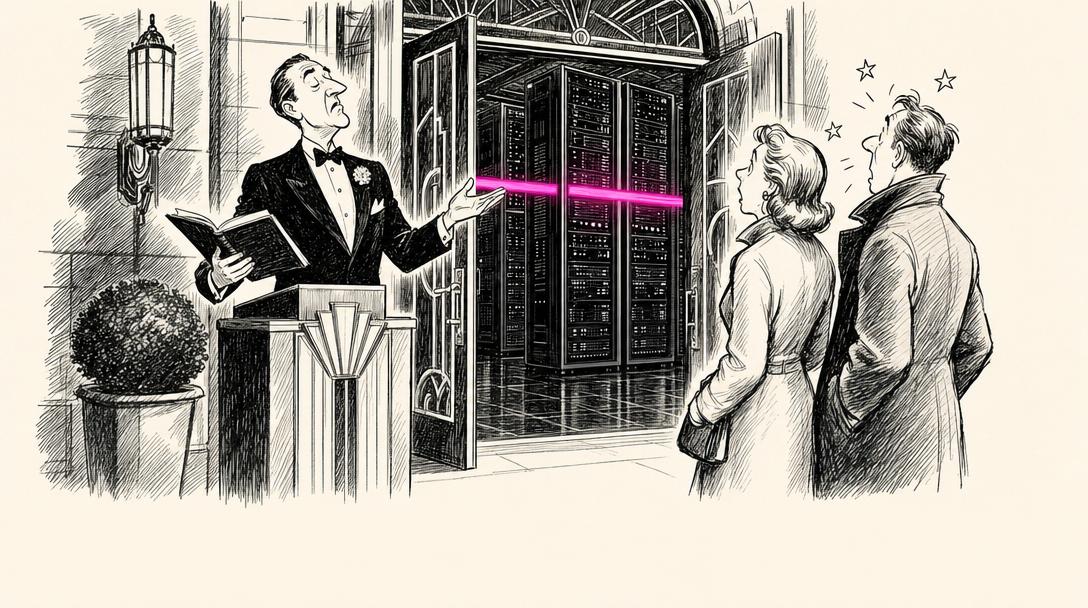
| "I'm afraid the algorithm has the corner table until 2043, madam." |
| Share |
|
|
The premium shift
|
|
You cannot survive in the middle. The capital's hospitality market is entirely bifurcated. While casual chains close, Kumori has just opened in Soho, serving custom-cut crispy nori handrolls. The chefs have pedigrees from Nobu and Roka, and set menus run to £35 for a quick lunch.
|
|
In Mayfair, long-standing Indian restaurant group Madhu's Mayfair is relaunching to focus exclusively on fine dining. The operators have done the math. You either charge £15 and go bankrupt on volume, or you strip out the casual options, charge a premium, and cater exclusively to the demographic immune to interest rates.
|
|
Johnny Carni, Central London
|
|
He is the founder and CEO of WaiV Robotics. His startup just emerged from stealth with a €6.4m seed round to build autonomous landing pads for maritime drones. The hardware allows UAVs to land on small vessels in high seas without a pilot. A brilliant reminder that the city still produces founders focused on heavy industrial engineering, not just enterprise software.
|
|
Three things to do today
|
|
The Affordable Art Fair opens its doors in Hampstead today. Thousands of contemporary pieces from 100 international galleries. A highly efficient, low-intimidation entry point into the capital's commercial art market.
|
|
Guildhall Library hosts the launch of 'Broadsides: Speaking to the People' at 6pm. The exhibition documents historical London life through the cheaply printed sheets that served as early political satire.
|
|
Global pop force ROSALÍA brings her LUX TOUR 2026 to The O2 in Greenwich tonight. A massive, high-production arena show dominating the eastern peninsula. Doors at 6:30pm.
|
|
Worth thirty minutes
|
|
The Guardian's audio investigation into fake fans and manufactured buzz. A sharp look at how bot networks and artificial intelligence are manipulating streaming algorithms to construct the illusion of musical popularity.
|
|
Thoughts
|
|
Look at the divergence between the digital and physical architecture of this city. In the space of twenty-four hours, we learned that Microsoft is taking over a sprawling Art Deco landmark in Soho to house its AI teams, a £1bn liquid-cooled hyperscale data centre has been approved for Park Royal, and a local voice-generation startup has hit an $11bn valuation. London is operating flawlessly as a digital node. The capital is aggressively absorbing the capital, talent, and electricity required to build the algorithmic future.
|
|
But look at the physical habitat. Franco Manca is boarding up the windows of its original Brixton site because it cannot afford the business rates. Mortgage affordability has crashed to its lowest level since the 2008 financial crisis. The high street is shrinking, the mid-market lenders are collapsing, and the basic cost of pouring a pint or making a pizza is structurally unviable. The capital is aggressively optimising its footprint for digital efficiency, treating human friction as a legacy cost. It is a rational, highly profitable reallocation of the city's resources. The question isn't whether it's fair — it's whether a city stripped of its messy, mid-market life can still generate the culture the algorithms are trying to scrape.
|
|
The week is moving. Hold your nerve.
|
|
Thoughts on the digital divergence? Hit reply. We read every one.
|
|
Forward this to someone who'd get it.
|
|
Until tomorrow, London.
|
|
|
|
Briefing One — A daily London briefing
You're receiving this because you subscribed at briefingone.com
Unsubscribe ·
View in browser ·
FAQ
|