|
Briefing One
|
13°C · Light Drizzle
|
|
|
London · Thursday, 14 May 2026
|
FTSE 100
10,764.69
-0.70% |
£/$
1.3314 |
Tube
2 alerts |
|
|
|
|
|
Good morning, London. A UCL professor just helped raise $650m without a public product, and the state wants the safety inspector to worry about GDP.
|
|
The government attempts to legislate its way to economic expansion, and the artificial intelligence sector absorbs another billion dollars. The stock exchange, meanwhile, completely ignores a political crisis.
|

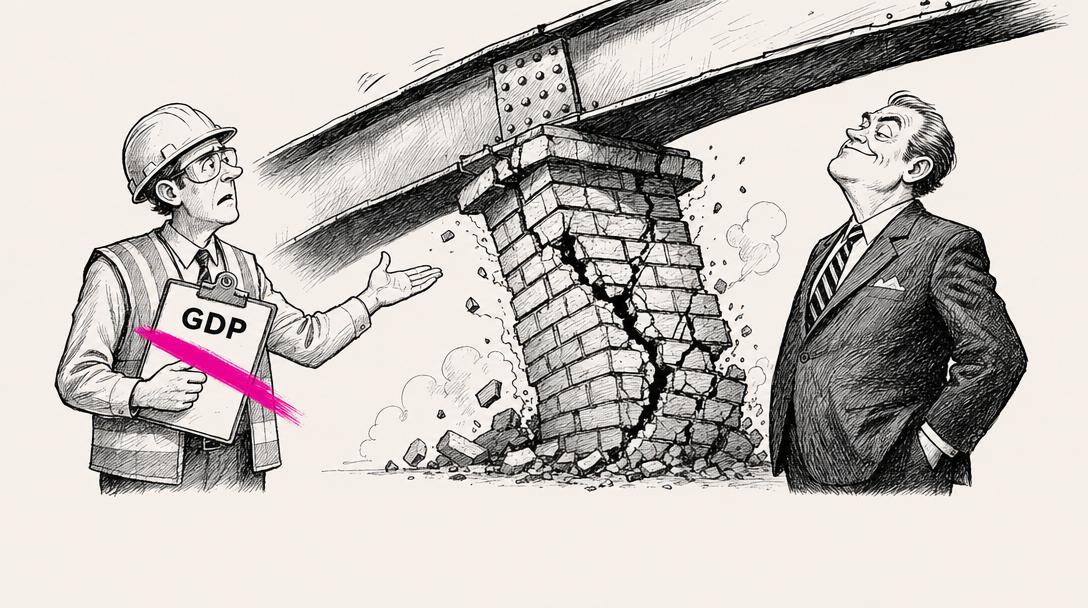
The safety inspector is told to watch the score.
|
|
The mandated growth
|
|
The government is rewriting the fundamental purpose of the state watchdog. A new 'Regulating for Growth Bill' will grant ministers the statutory power to issue strategic directives to bodies like the Environment Agency and the Health and Safety Executive.
|
|
The legislation is designed to force regulators to prioritise economic growth alongside their core functions. Westminster is tired of the administrative friction slowing down corporate expansion. It is a highly aggressive shift. The state is abandoning the concept of purely independent oversight. It is telling the umpires to start worrying about the score.
|
|
By the numbers
60.03 The point gain for the FTSE 100 yesterday, closing at 10,325.35, as global mining revenue insulated the index from the political instability surrounding the Prime Minister.
£9.4bn The value of the takeover bid by private equity firm EQT backed by Intertek, driving shares up 5.3 per cent.
12% The sudden drop in Vistry Group's share price following a first-half profit warning, a stark indicator of the pressure on UK housebuilders.
5.07% The yield on 10-year UK gilts, cooling slightly from 5.10 per cent the previous day as the bond market finds a temporary floor.
|
|
|
The £102bn ring-fence
|
|
The structural overhaul extends directly into the Square Mile. Following the King's Speech, the government has introduced the Enhancing Financial Services Bill. The legislation consolidates the Payment Systems Regulator into the Financial Conduct Authority.
|
|
It also relaxes the bank ring-fencing regime to unlock lending for small and medium-sized enterprises. The post-2008 regulatory consensus is being quietly dismantled. The state wants the banks to take more risk to stimulate the domestic economy, unwinding the exact protections installed after the last financial collapse.
|
|
Quick take
Should safety and environmental regulators be forced to prioritise economic growth?
Tap an option to vote
Vote to see yesterday's results →
|
|
|
The algorithmic capital
|
|
London's grip on the artificial intelligence race is tightening. Recursive Superintelligence has emerged from stealth with a $650m funding round at a $4.65bn valuation. The company operates between London and San Francisco with fewer than thirty employees.
|
|
They are building open-ended algorithms designed to recursively improve themselves. The talent pool is deeply local. The team includes Tim Rocktäschel, a UCL professor and former Google DeepMind scientist. The capital required to build the next generation of software is staggering, and global venture funds are aggressively deploying it in Zone 1.
|
|
The hardware bottleneck
|
|
The software requires physical infrastructure. Fractile has just raised a $220m Series B round to engineer specialised AI inference hardware.
|
|
The London-based startup is building chips specifically designed to solve the memory bandwidth constraints that currently throttle large language models. The capital is no longer just writing the code. It is funding the heavy industrial engineering required to process it. Between Fractile and Recursive, investors have poured nearly $900m into London AI firms in a single 24-hour window.
|
|
The Zone 1 campus
|
|
The modern university experience in the centre of the city is an exercise in elite geography. A new essay by a third-year undergraduate details the reality of studying at the London School of Economics.
|
|
The academic rigour is almost secondary to the location. The campus offers immediate physical proximity to the Royal Courts of Justice and the dining rooms of Covent Garden. Students attend guest lectures from former prime ministers between seminars. You are not just paying for an interdisciplinary degree. You are purchasing direct access to the municipal machinery of a global capital.
|
|
|
| "It's structurally unsound, but condemning it would show a real lack of macroeconomic vision." |
| Share |
|
|
Catherine Weeks, The City
|
|
She is a partner at law firm Simmons & Simmons. She is unpicking the sweeping changes to the Financial Services Bill on behalf of institutional clients. When the government decides to relax the Senior Managers and Certification Regime for mid-to-senior roles, it is the City's legal tier that immediately translates that political intent into corporate action.
|
|
Tim Rocktäschel, Bloomsbury
|
|
The UCL professor and former Google DeepMind scientist is a co-founder of Recursive Superintelligence. His transition from academic research into a startup with a $4.65bn valuation illustrates the sheer velocity of the current tech market. The traditional boundary between the university laboratory and the venture capital fund has completely evaporated.
|
|
Zaim Beekawa, Canary Wharf
|
|
The JPMorgan analyst is watching the domestic housing market buckle. Shares in housebuilder Vistry Group slumped 12 per cent yesterday after a severe profit warning. The domestic construction sector remains incredibly sensitive to interest rates and local planning friction.
|
|
Mid-2000s nostalgia
|
|
Multi-platinum R&B artists NE-YO and AKON bring their Nights Like This Tour to The O2 arena tonight. A massive, high-production execution of mid-2000s nostalgia dominating the Greenwich peninsula. Doors open at 6:00pm.
|
|
The ethics of translation
|
|
A sharp, high-brow dissection of the ethics of literary translation. In her latest 'Miss Translation' column for n+1, Bela Shayevich explores the complexities of translating Han Kang and the brutal compromises required to move culture across linguistic borders.
|
|
Thoughts
|
|
Look closely at the mechanics of the new 'Regulating for Growth Bill' introduced this week. The government is granting ministers the statutory power to issue strategic directives to regulators like the Environment Agency and the Health and Safety Executive. The explicit aim is to force these watchdogs to prioritise economic growth alongside their core regulatory functions. It is framed as a necessary correction to an overly cautious bureaucracy. In reality, it is a fundamental unravelling of independent oversight.
|
|
You do not instruct the health inspector to worry about a company's profit margin unless you are entirely out of macroeconomic ideas. Regulation exists precisely to manage the negative externalities that the market ignores. By forcing safety and environmental watchdogs to consider GDP, the state is effectively outsourcing its economic stimulus to the umpires. The government cannot fix the structural friction in the economy. The planning delays and the lack of infrastructure remain, so it is simply asking the referees to officiate a faster game. It is less a regulatory reform than a white flag: an admission that the only way to build anything in Britain now is to mandate that we stop finding reasons not to.
|
|
A thin day for hospitality news, but the capital keeps moving.
|
|
Thoughts on the growth mandate? Hit reply. We read every one.
|
|
Forward this to someone who'd get it.
|
|
Until tomorrow, London.
|
|
|
|
Briefing One — A daily London briefing
You're receiving this because you subscribed at briefingone.com
Unsubscribe ·
View in browser ·
FAQ
|