|
Briefing One
|
11°C · Clear
|
|
|
New York · Wednesday, 29 April 2026
|
S&P 500
7,690.73
-0.69% |
$/€
0.8915 |
Subway
16 alerts |
|
|
|
|
|
Good morning, New York. The city spent all of 2025 agonizing over a job-loss crisis that, according to newly revised data, never actually happened.
|
|
Mayor Mamdani picks a billion-dollar fight with Albany, the billable hour faces an existential threat, and the West Village gets a very expensive lesson in slowing down.
|

The end of the six-minute increment.
|
|
The phantom recession
|
|
The prevailing consensus was that New York City lost 20,000 jobs in 2025. This drove twelve months of political hand-wringing and op-eds about structural decline. The revised data has just arrived. The city actually added 20,000 jobs over that exact period. The local economy is fine. The city simply prefers a doom narrative to basic accounting.
|
|
|
|
Albany's billion-dollar problem
|
|
Mayor Mamdani and Speaker Julie Menin are formally demanding that the state reduce the city's Pass-Through Entity Tax (PTET) credit from 100 percent to 75 percent. The move would generate roughly $1 billion in revenue, drawn entirely from high-earning business owners. Governor Hochul is resisting. City Hall points out that New York City provides 55.6 percent of state revenue and gets 41.7 percent back. The calculation here is blunt: the city needs the money, and Mamdani is betting that the partnership class is too tied to Manhattan to leave over a marginal tax hike.
|
|
Quick take
Would you hire an AI-native law firm if it guaranteed a fixed flat fee?
Tap an option to vote
Vote to see yesterday's results →
|
|
|
The moving tax
|
|
The median asking rent in the city hit $3,616 in the first quarter. Rents are rising, but the actual story is mobility. Because market rates have detached so violently from older leases, the average long-term renter would need an additional $70,440 in annual household income just to afford moving to a new apartment. This is the golden ball and chain. You do not upsize when you have a child. You do not downsize when they leave. You hoard the lease. The city's residential metabolism simply stops.
|
|
The automated associate
|
|
Manifest OS, a New York-based legal startup, just raised a $60 million Series A. They are not selling software to law firms. They are building their own "AI-native" firm. They use proprietary models to execute corporate legal work and charge a fixed fee, entirely abandoning the billable hour. Backed by Menlo Ventures and Kleiner Perkins, the company is treating the traditional partnership structure as a legacy inefficiency.
|
|
The Penn District apology
|
|
MdeAS Architects and MNLA have won a MASterworks Design Award for their overhaul of PENN 2 and the creation of Plaza 33. They turned a hostile, traffic-choked stretch of 33rd Street into a 17,700-square-foot pedestrian plaza. It is a remarkable piece of retroactive urbanism. They took the ugliest, most chaotic transit nexus in the western hemisphere and made it slightly bearable. It is the exact kind of incremental public realm victory the city usually fails to deliver.
|
|
|
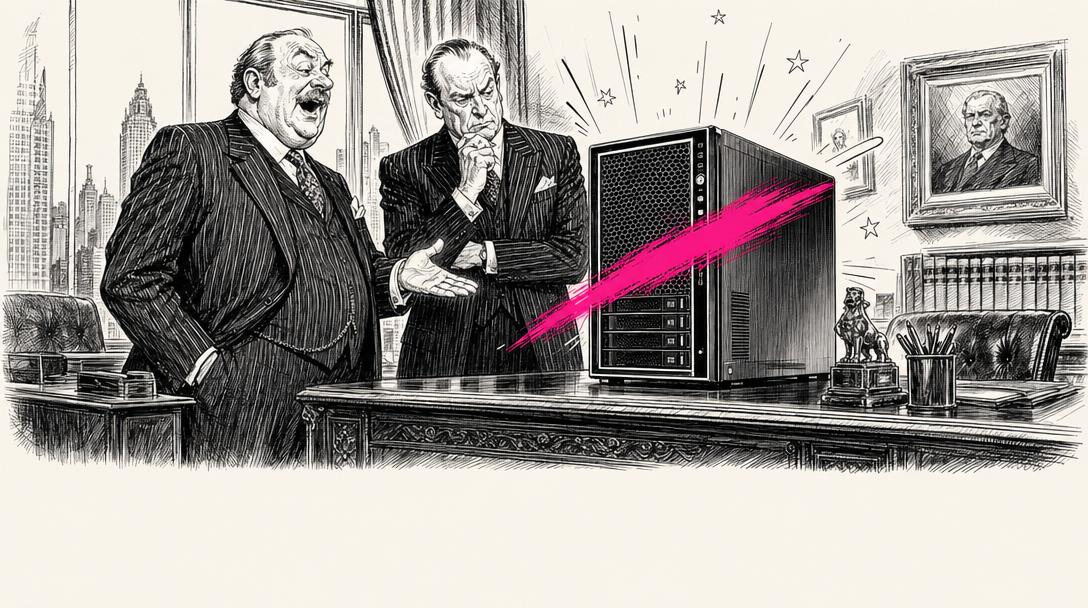
| "It reads the contract in three seconds. We're teaching it to bill for six." |
| Share |
|
|
Elizabeth Adams, transit, City Hall
|
|
She is the newly appointed Senior Advisor for Fast and Free Buses. A former transit advocate, she is now inside the building with a mandate to speed up commutes for a million daily riders. Mamdani's universal free bus pledge has stalled, so the political priority is execution. If she can actually paint the bus lanes red and enforce them, it will matter more to outer-borough working patterns than any subway extension.
|
|
Two speeds of lunch
|
|
The dining market is bifurcating. Gwyneth Paltrow's Goop Kitchen has opened its first New York outpost in Midtown. It is a ghost kitchen. You order on your phone, collect a $20 grain-free wrap from a pickup counter, and eat it at your desk.
|
|
Further downtown, Dante Aperitivo has opened on Bank Street in the West Village. The founders are selling Italian piazza culture. Lobster bucatini, caviar martinis, and an explicit mandate to sit for hours. You are either eating pure caloric efficiency in a windowless room, or you are performing leisure at a premium. The casual lunch has vanished.
|
|
Where to be tonight
|
|
The Whitney is hosting three guided tours of the 2026 Biennial this afternoon at 1:00, 2:00, and 3:00 PM. A highly curated pass through the definitive American art survey.
|
|
Anton Kern and Elizabeth Dee are hosting a conversation on 'Downtown Dealers' at Anton Kern Gallery at 6:30 PM. An inside look at the mechanics of the contemporary art market.
|
|
The Moth is hosting a StorySLAM at The Bell House in Brooklyn at 8:00 PM. The theme is "Narrow Escapes." Still the most reliable live storytelling in the city. Tickets are $22.
|
|
Richard Bush, advertising, Manhattan
|
|
He is the first Chief Platform Officer at FIG, the New York creative agency. He arrives with thirty years of tech experience to run StoryData Labs. The brief is to use artificial intelligence to generate brand copy. The creative agencies have realised that hiring copywriters is expensive, and algorithms do not ask for equity.
|
|
One recommendation
|
|
The VinePair Podcast on why New York's top restaurateurs are courting the ultra-wealthy. A sharp, cynical dissection of the economics behind places like the new 550 Madison development, and why the $100 Tuesday dinner is vanishing.
|
|
Thoughts
|
|
Midtown Manhattan is essentially a monument to the billable hour. The architecture of the corporate law firm, with partners at the top selling the grinding, hourly labour of junior associates at the bottom, is what pays the premium commercial rents. It sustains the $25 chopped salad lines, it funds the townhouses in Brooklyn Heights, and it drives the recruitment pipelines at Columbia and NYU. Manifest OS raising $60 million to build an AI-native law firm is not a software story. It is a structural threat to that entire economy. By using proprietary models to execute corporate legal work for a fixed, predictable fee, they are bypassing the associate class entirely. The firm operates without the pyramid. The client gets cost certainty, the startup gets the margin, and the junior lawyer gets quietly erased from the spreadsheet.
|
|
For years, the professional class in New York assumed that automation was a blue-collar problem. The threat to Midtown was supposed to be remote work, or high interest rates, or a generalized vibe shift to the Sun Belt. But the real vulnerability is the inefficiency of paying a 26-year-old $225,000 a year to review contracts. The transition will be slow, but the trajectory is set. The era of billing by the hour for junior competence is closing.
|
|
The week is hitting its stride. We will see you out there.
|
|
Thoughts? Hit reply. We read every one. Forward this to a colleague who needs to catch up.
|
|
Until tomorrow, New York.
|
|
|
|
Briefing One — A daily New York briefing
You're receiving this because you subscribed at briefingone.com
Unsubscribe ·
View in browser ·
FAQ
|